
Corrugated packaging is used throughout manufacturing, warehousing, and distribution because it provides a practical balance of protection, versatility, and cost. But not every product needs a traditional corrugated box.
Depending on the application, corrugated sheets, layer pads, custom boxes, or die-cut packaging may provide better protection while reducing unnecessary material and improving packing efficiency. The right solution depends on factors such as product size and weight, pallet configuration, shipping conditions, storage requirements, and the level of protection needed.
Breckenridge Paper & Packaging supplies corrugated sheets, boxes, printed and die-cut packaging, chipboard layer sheets, edge protection, and other paper and board products. Understanding how these products differ can help manufacturers and distributors build a more efficient packaging system instead of relying on the same solution for every shipment.
What Is Corrugated Packaging?
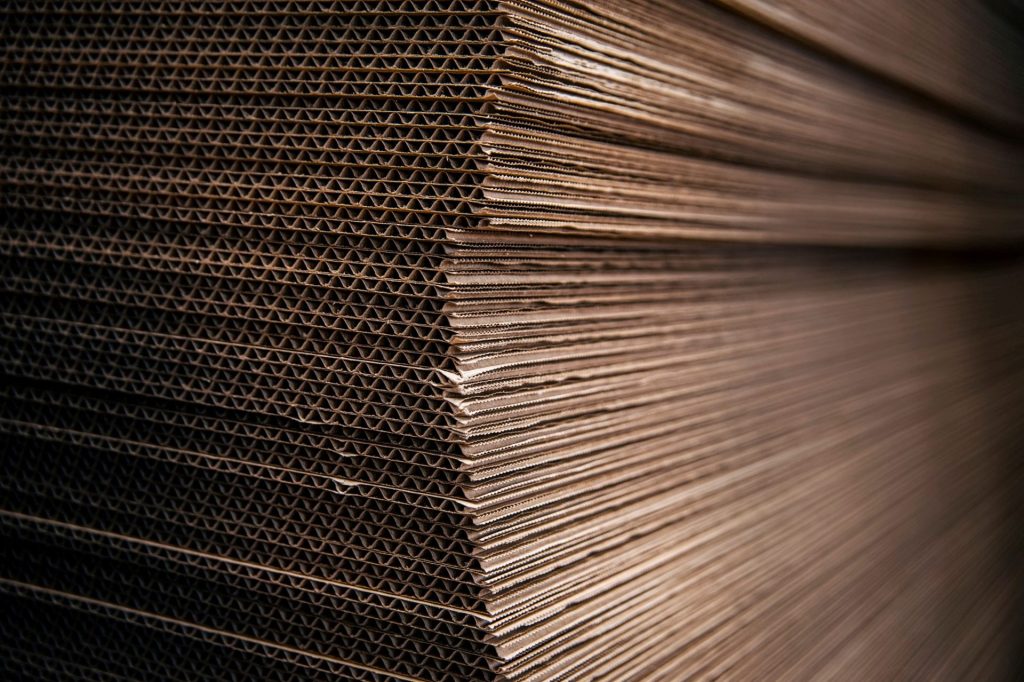
Corrugated material is constructed using a fluted medium combined with linerboard. The fluted structure creates strength and cushioning while keeping the material relatively lightweight.
Corrugated packaging can be produced in different board grades, flute profiles, sizes, and configurations to meet specific performance requirements. That flexibility allows it to serve several functions throughout the packaging process, from separating products on a pallet to creating a complete shipping container.
When choosing a corrugated solution, consider:
- Product dimensions and weight
- Fragility and susceptibility to surface damage
- Stacking requirements
- Pallet configuration
- Transportation and handling conditions
- Storage environment
- Packing and unpacking processes
- Material and labor costs
These factors help determine whether a box, sheet, layer pad, or custom design provides the best combination of protection and efficiency.
When Should You Use Corrugated Boxes?
Corrugated boxes are one of the most versatile packaging options for shipping individual products, components, kits, and groups of items.
A properly specified box provides containment as well as protection. It can help shield products from impacts, abrasion, compression, dust, and routine handling throughout storage and transportation.
Corrugated boxes are commonly used for:
- Manufactured components
- Consumer products
- Industrial supplies
- E-commerce shipments
- Food and beverage products
- Parts and assemblies
- Multi-item orders
Standard boxes can be an economical choice when products fit common dimensions and protection requirements. However, using an oversized box can increase void fill requirements and potentially raise shipping and material costs.
For products with unusual dimensions or specialized protection needs, a custom corrugated box may be more efficient.
When Do Custom Corrugated Boxes Make Sense?
Custom corrugated boxes are designed around the product rather than requiring the product to fit an existing package.
This can provide several operational advantages. A better-fitting carton may reduce empty space, decrease the amount of void fill required, improve pallet utilization, and provide better product protection.
Custom boxes can also be engineered around product weight, stacking requirements, handling conditions, and distribution risks.
They are particularly useful when:
- Products have unusual shapes or dimensions
- Standard cartons require excessive void fill
- Products need additional structural support
- High shipping volumes justify packaging optimization
- Presentation is important
- Several components need to remain organized within one package
The cost of custom packaging should be evaluated against the entire packaging process. A custom box that costs slightly more per unit may still reduce total costs if it lowers material usage, packing labor, product damage, or freight requirements.
What Are Corrugated Sheets Used For?
Corrugated sheets provide protection without fully enclosing a product.
They can be placed beneath, above, or between products to create additional separation and structural support. They are frequently used as part of palletized shipping configurations where a full box would be unnecessary.
Common applications include:
- Separating layers of products
- Protecting pallet tops and bottoms
- Creating barriers between stacked items
- Protecting surfaces from abrasion
- Improving load distribution
- Adding reinforcement within larger packaging systems
For manufacturers shipping uniform products in bulk, corrugated sheets can be a simple way to add protection without introducing additional cartons.
Sheets can also be combined with stretch film, strapping, and edge protection to create a complete pallet containment system.
Corrugated Sheets vs. Layer Pads
Corrugated sheets and layer pads can serve similar purposes, but the right material depends on the load and level of support required.
Layer pads are placed between tiers of products on a pallet or inside a container. They help separate products, distribute weight, improve stacking stability, and reduce direct contact between individual layers.
Corrugated layer pads provide cushioning and rigidity, while chipboard layer sheets can provide a thinner separation layer when less cushioning is required.
Layer pads are commonly used with:
- Bottles and containers
- Cans
- Cartons
- Manufactured components
- Packaged food products
- Uniform palletized goods
The goal is not simply to add another piece of packaging material. The layer pad should contribute to a more stable and efficient load.
Using material that is heavier than necessary can add cost without meaningfully improving performance. Using material that is too light may fail to provide adequate support.
What Is Die-Cut Corrugated Packaging?
Die-cut corrugated packaging is manufactured into specific shapes using cutting dies. Instead of relying on a conventional rectangular carton, the packaging can incorporate tabs, slots, folds, openings, handles, dividers, and other structural features.
This allows the package to fit closely around a product or perform a specialized function.
Die-cut packaging can be useful for:
- Irregularly shaped products
- Product displays
- Internal packaging components
- Trays
- Dividers
- Inserts
- Parts that require controlled positioning
- Packaging designed for faster assembly
A well-designed die-cut package can sometimes replace several separate packaging components. For example, a custom insert may hold a product securely enough to reduce the amount of additional cushioning or void fill needed.
That can simplify packing while creating a more consistent package.
Corrugated Boxes vs. Sheets: Which Provides Better Protection?
A corrugated box generally provides more complete protection because it surrounds the product. Corrugated sheets are better suited to applications where separation, reinforcement, surface protection, or pallet stability is the primary objective.
The right choice depends on the risk.
If individual products need protection from impacts and handling, a box combined with appropriate cushioning may be necessary. If products are already contained and simply need separation between pallet layers, corrugated sheets or layer pads may be sufficient.
Some applications benefit from both.
Products may be packed into corrugated cartons, stacked onto corrugated pallet sheets, separated with layer pads, protected at the corners, secured with strapping, and wrapped with stretch film. Each material addresses a different packaging requirement.
How Corrugated Packaging Can Help Reduce Costs
Reducing packaging costs does not necessarily mean using less packaging everywhere. The objective is to use the appropriate amount and type of material to protect the product efficiently.
Several strategies can help.
Right-Size the Package
Oversized boxes consume additional corrugated material and often require more cushioning or void fill. A better-fitting package can reduce material usage and improve packing efficiency.
Evaluate Custom Packaging for High-Volume Products
For products shipped frequently, custom corrugated packaging may reduce wasted space, improve protection, and standardize the packing process.
Optimize Pallet Configuration
Corrugated sheets and layer pads can improve stacking and load organization. Better pallet utilization may allow more product to move within the same shipping footprint.
Use Protection Where It Is Needed
Not every surface requires the same amount of material. Combining corrugated sheets with edge protection, stretch film, strapping, or targeted cushioning can provide protection without overpacking the entire shipment.
Consider Labor Alongside Material Cost
Packaging that is difficult to assemble or requires several separate components can increase labor costs. A custom or die-cut solution that simplifies packing may provide savings even when its unit material cost is higher.
Corrugated Packaging and Pallet Protection
For palletized freight, corrugated materials frequently work alongside other packaging products rather than functioning independently.
A pallet packaging system might include a corrugated sheet beneath the load, layer pads between product tiers, edge protectors around vulnerable corners, strapping for securing heavy products, and stretch film for overall load containment.
The combination should be selected based on load weight, stacking pattern, transportation method, handling requirements, and the types of forces the shipment is likely to encounter.
Improving one component without considering the rest of the load can sometimes create new problems. For example, adding stronger strapping without adequate corner protection could increase pressure on vulnerable product edges.
Evaluating the entire packaging system helps ensure that materials work together.
Frequently Asked Questions About Corrugated Packaging
Are corrugated sheets the same as cardboard sheets?
The terms are sometimes used interchangeably, but corrugated sheets contain a fluted layer between linerboards. Solid paperboard or chipboard does not have the same fluted construction. This difference affects thickness, rigidity, cushioning, and strength.
What are corrugated layer pads used for?
Layer pads separate tiers of products, distribute weight, protect surfaces, and can improve pallet stability. They are frequently used in manufacturing and distribution applications involving uniform stacked products.
When should I use a custom corrugated box?
Custom boxes can make sense when standard cartons are significantly oversized, products have unusual dimensions, protection requirements are complex, or shipping volume makes packaging optimization worthwhile.
What is the advantage of die-cut corrugated packaging?
Die-cut packaging can be designed specifically around a product or packaging process. It can incorporate inserts, dividers, tabs, trays, and other features that improve product positioning, protection, presentation, or packing efficiency.
Can corrugated sheets replace boxes?
In some palletized or bulk applications, yes. However, sheets do not provide the complete enclosure of a box. The appropriate solution depends on the product and the protection required during handling, storage, and transportation.
Choosing the Right Corrugated Packaging Solution
The choice between corrugated boxes, sheets, layer pads, and die-cut packaging should begin with the product and the way it moves through the supply chain.
Standard boxes provide versatile containment and protection. Custom boxes can eliminate unnecessary space and address specialized requirements. Corrugated sheets and layer pads help separate, reinforce, and stabilize palletized products. Die-cut packaging can solve more complex challenges by creating a package specifically around the product or packing process.
Breckenridge Paper & Packaging works with manufacturers, distributors, and other businesses to identify paper and board solutions based on product weight, shipping conditions, storage requirements, and operational goals. With corrugated sheets, boxes, printed and die-cut packaging, chipboard layer sheets, edge corner protection, and complementary packaging materials, our team can help evaluate the complete package rather than simply supplying individual components.
If your current packaging uses excessive material, requires too much labor, or isn’t providing consistent protection, Breckenridge can help you evaluate the application and identify a more efficient corrugated packaging solution.