
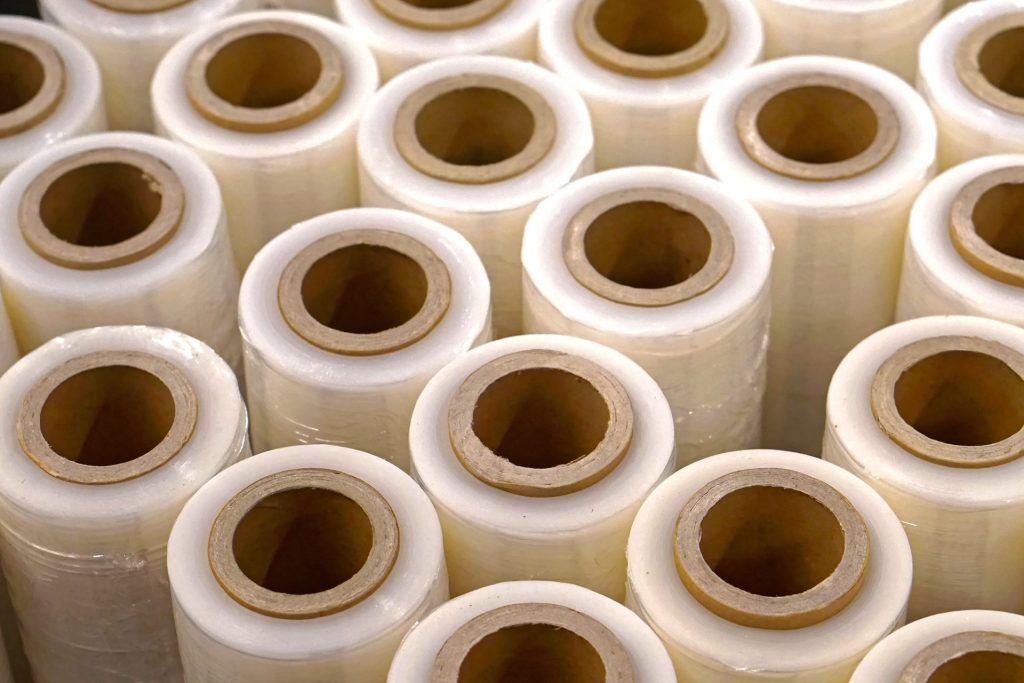
When evaluating packaging materials, it’s common to hear the terms stretch film and shrink film used interchangeably. While both are plastic films designed to protect products during shipping and storage, they serve very different purposes and require different equipment.
Choosing the wrong material can lead to higher packaging costs, slower production, damaged shipments, or an unprofessional presentation. Understanding how each film works and where it performs best can help manufacturers, distribution centers, and fulfillment operations improve efficiency while reducing waste.
At Breckenridge Paper & Packaging, we work with customers to identify the right packaging materials based on their products, equipment, and operational goals. Whether you’re packaging individual retail products or stabilizing pallet loads for transportation, selecting the proper film is an important first step.
The Difference Between Stretch Film and Shrink Film
Although both materials are made from plastic films, they function in completely different ways.
Stretch film is designed to stretch around products or pallet loads using tension. Once applied, the film attempts to return to its original shape, creating a tight, secure hold that keeps products stable during transportation and storage.
Shrink film, on the other hand, is loosely placed around a product before heat is applied. As the film is heated inside a shrink tunnel or with a heat gun, it contracts tightly around the product, creating a clean, professional appearance.
The intended application largely determines which material is the better choice.
When Stretch Film Is the Right Choice
Stretch film is most commonly used for palletizing products before shipment. Its primary purpose is load containment rather than individual product packaging.
Stretch film works well for:
- Securing palletized freight
- Preventing shifting during transportation
- Combining multiple cartons into a stable load
- Protecting products from dust and moisture during storage
- Warehouse and distribution center operations
Stretch film is available in hand-applied and machine-applied versions, along with specialty options such as pre-stretched film, colored film, PCR film, vented film, and cold-temperature film.
The right film depends on factors including pallet weight, load shape, transportation conditions, and packaging equipment.
When Shrink Film Is the Better Solution
Shrink film is typically selected when presentation is just as important as protection.
Common applications include:
- Retail packaging
- Multi-pack consumer products
- Food and beverage packaging
- Printed product bundles
- Promotional kits
- Tamper-evident packaging
Shrink film creates a smooth, tightly fitted package that improves product appearance while protecting against dirt, moisture, and handling during distribution.
Polyolefin shrink film is one of the most widely used materials because it provides excellent clarity, strong seals, and consistent performance across many applications.
Equipment Requirements
Equipment is another major distinction between these packaging methods.
Stretch film can often be applied manually using hand rolls for lower-volume operations. As production increases, many companies invest in semi-automatic or fully automatic stretch wrappers to improve consistency and reduce labor.
Shrink film requires heat to perform properly. Depending on production volume, packaging operations may utilize:
- L-bar sealers
- Side sealers
- Shrink tunnels
- Automatic shrink wrapping systems
Properly matching film specifications with sealing equipment and tunnel settings helps maximize line speed while minimizing scrap and downtime.
Comparing Costs
Many buyers initially compare only the price per roll, but material cost tells only part of the story.
Stretch film programs typically involve considerations such as:
- Film gauge
- Stretch percentage
- Load containment performance
- Roll length
- Labor requirements
- Machine efficiency
Shrink film programs often include additional cost factors including:
- Film thickness
- Tunnel energy consumption
- Seal quality
- Equipment maintenance
- Production speed
- Scrap generated from poor sealing
The lowest-priced film doesn’t always produce the lowest total packaging cost. Higher-performance materials may reduce waste, increase throughput, or improve load stability enough to offset a higher purchase price.
Looking at total operational cost instead of material cost alone often produces better long-term results.
Which Film Provides Better Protection?
The answer depends on what you’re trying to protect.
Stretch film excels at keeping pallet loads stable throughout transportation. It minimizes product movement, helps prevent shifting, and improves overall load integrity.
Shrink film protects individual products by creating a sealed package around the item itself. It offers excellent product presentation while helping guard against dust, moisture, and handling damage.
Neither material replaces protective packaging such as foam, bubble rolls, edge protection, or void fill when cushioning fragile products is required.
Questions to Ask Before Choosing
Before selecting a packaging solution, consider several operational questions:
- Are you packaging individual products or pallet loads?
- Is product appearance important for retail display?
- Will the package require tamper evidence?
- What production volume does your operation handle?
- Is manual packaging acceptable, or is automation needed?
- Are shipping damage reduction or presentation your primary goals?
Answering these questions helps narrow the selection before evaluating specific film grades and equipment options.
Can You Use Both?
Absolutely.
Many manufacturers use both stretch film and shrink film within the same facility.
For example, a company may shrink wrap individual retail products before placing them into corrugated cartons. Once the cartons are stacked onto pallets, stretch film secures the entire load for transportation.
Using both materials where they perform best provides protection at multiple stages throughout the supply chain.
How Breckenridge Helps Optimize Packaging Operations
Selecting the right film involves more than choosing a material. Film performance depends on the products being packaged, the equipment being used, production speeds, transportation requirements, and overall packaging objectives.
Breckenridge Paper & Packaging works closely with manufacturers, distributors, and fulfillment operations to recommend packaging solutions that improve efficiency while reducing unnecessary costs. Our consultative approach includes helping customers select the proper stretch film or shrink film, evaluating equipment compatibility, identifying opportunities to reduce material usage, and supporting packaging line performance over time.
In addition to stretch and shrink films, we offer protective packaging, corrugated products, strapping systems, adhesives, void fill materials, mailing supplies, and packaging equipment to support complete end-of-line packaging operations.
Frequently Asked Questions
Is stretch film the same as shrink film?
No. Stretch film is stretched around products using tension, while shrink film contracts around products when heat is applied.
Which is less expensive?
It depends on the application. Stretch film generally requires less energy because it doesn’t need heat, while shrink film often provides superior product presentation. Total packaging cost depends on equipment, labor, film usage, and production efficiency.
Can stretch film be used without equipment?
Yes. Hand stretch film is commonly used for lower-volume operations, while higher-volume facilities often use stretch wrapping machines.
Does shrink film require special equipment?
Yes. Most shrink film applications require sealing equipment and a heat source such as a shrink tunnel or heat gun.
Which film is better for pallet shipping?
Stretch film is the standard solution for stabilizing pallet loads during transportation and warehouse storage.
Finding the Right Packaging Solution
There isn’t a one-size-fits-all answer when comparing stretch film and shrink film. The right choice depends on your products, production environment, equipment, and shipping requirements.
If you’re unsure which solution best fits your operation, Breckenridge Paper & Packaging can help evaluate your packaging process and recommend materials that improve efficiency, reduce damage, and support your long-term operational goals. Whether you’re optimizing an existing packaging line or planning a new one, our team provides practical guidance backed by decades of packaging experience.
Explore our stretch film solutions, shrink film products, packaging equipment, and protective packaging options to find the right combination for your operation.